



Creatine is widely known as a muscle supplement.
But emerging research shows its impact on the brain may be just as significant, and in some cases, even more compelling.
The brain is an energy-intensive organ. It consumes approximately 20% of total body energy despite representing only 2% of body mass.
When mental demand increases, during stress, sleep deprivation, high workload, or aging ATP availability becomes critical.
Creatine plays a central role in ATP regeneration.
This article explores the science behind creatine for brain performance, including memory, focus, reaction time, stress resilience, and cognitive aging.
The Brain Runs on ATP


Every thought, memory, and decision requires energy.
Neurons rely on ATP to:
-
Maintain membrane potentials
-
Fire electrical impulses
-
Support neurotransmitter release
-
Repair cellular damage
-
Sustain synaptic plasticity
When ATP availability drops, mental fatigue increases.
Creatine supports rapid ATP regeneration by donating a phosphate group to convert ADP back into ATP.
In simple terms:
Creatine helps the brain maintain energy under pressure.
Creatine Storage in the Brain
Unlike muscle tissue — which stores large amounts of creatine, brain creatine levels are more tightly regulated and lower overall.
However, research shows that supplementation can increase brain creatine concentrations, particularly in individuals with lower baseline levels such as:
-
Vegetarians and vegans
-
Older adults
-
Individuals under chronic stress
-
Sleep-deprived individuals
This increase in brain phosphocreatine may enhance cognitive performance when demand is high.
Creatine and Working Memory
Working memory is the ability to hold and manipulate information temporarily.
It is essential for:
-
Decision making
-
Problem solving
-
Strategic thinking
-
Complex task execution
Studies have shown creatine supplementation may improve working memory performance, particularly under conditions of sleep deprivation or mental fatigue.
In one controlled study, participants supplementing with creatine demonstrated improved performance on memory and intelligence tests compared to placebo.
The benefits appear more pronounced when the brain is under stress.
This suggests creatine acts as a cognitive resilience compound not necessarily a stimulant, but an energy stabiliser.
Creatine and Mental Fatigue Resistance



Modern cognitive life is demanding.
High workload, screen exposure, multitasking, and reduced sleep all increase ATP demand in the brain.
Research suggests creatine supplementation may:
-
Reduce mental fatigue
-
Improve sustained attention
-
Support reaction time
-
Enhance task endurance
In sleep-deprivation studies, creatine has been shown to partially offset declines in cognitive performance.
This is particularly relevant for:
-
Executives
-
Entrepreneurs
-
Shift workers
-
Parents
-
Athletes during competition phases
Creatine does not “stimulate” the brain like caffeine.
Instead, it supports underlying cellular energy.
Creatine and Reaction Time
Reaction time depends on efficient neural signalling.
Because synaptic transmission requires ATP, enhanced phosphocreatine availability may support faster neural processing.
Some studies suggest creatine supplementation may:
-
Improve reaction time in athletes
-
Enhance cognitive speed under fatigue
-
Support decision speed in complex tasks
While effects vary between individuals, the underlying mechanism remains consistent:
More efficient ATP regeneration supports faster neural firing.
Creatine and Aging: Cognitive Longevity
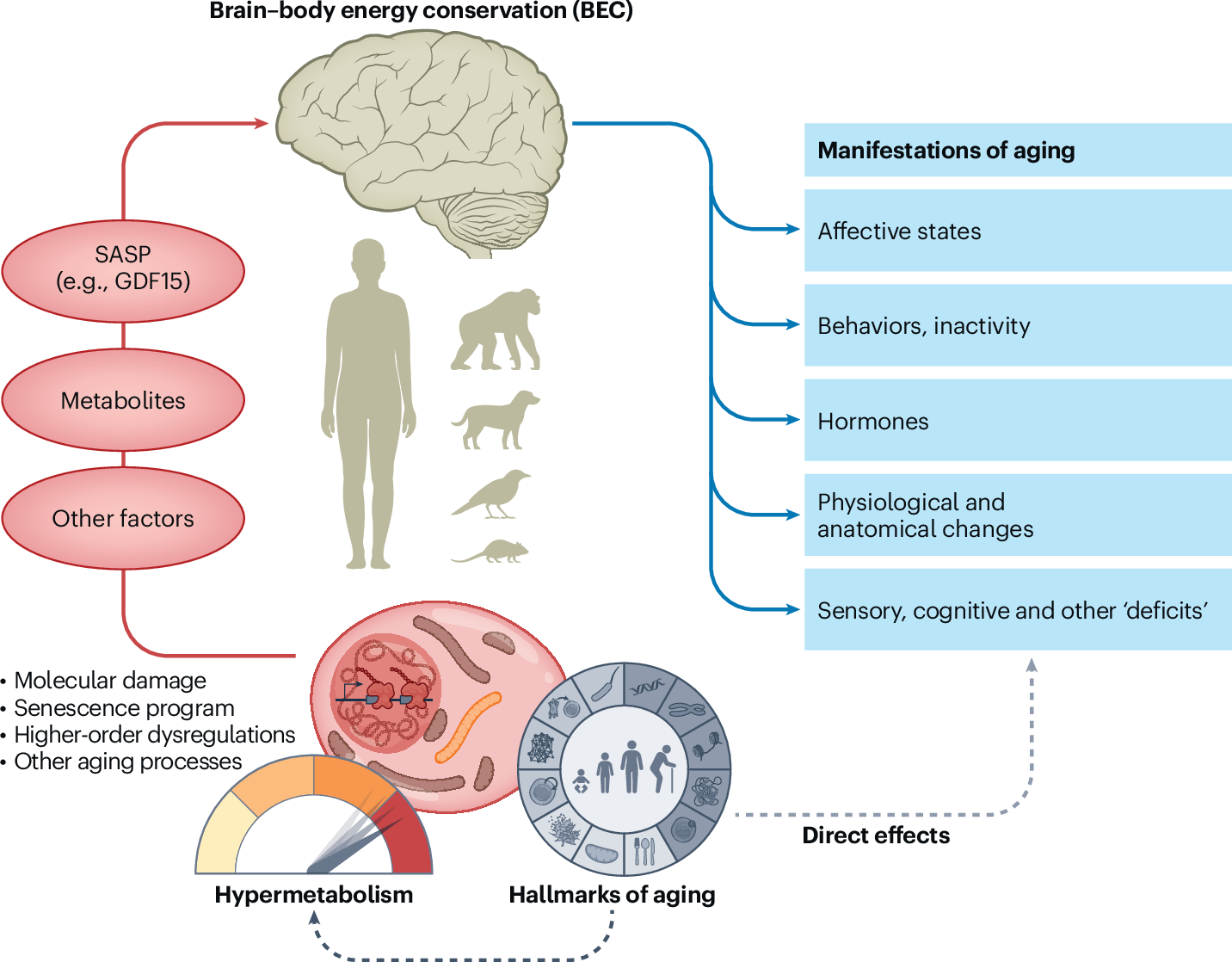


As we age, several physiological changes occur:
-
Reduced mitochondrial efficiency
-
Increased oxidative stress
-
Gradual cognitive decline
-
Decreased muscle mass
Because creatine supports mitochondrial energy buffering, researchers are exploring its role in cognitive aging.
Preliminary evidence suggests creatine may:
-
Support memory retention
-
Enhance mental clarity
-
Improve strength and cognitive dual-task performance
-
Support neuroprotective pathways
Creatine is not a cure or treatment for neurodegenerative disease.
However, as part of a broader longevity strategy — alongside exercise, sleep, and nutrition — it may play a supportive role in maintaining brain energy capacity.
For individuals over 40, creatine becomes increasingly relevant.
Creatine, Stress & Brain Energy
Psychological stress increases metabolic demand.
Chronic stress may reduce available ATP and increase oxidative strain.
Creatine may buffer this demand by stabilising cellular energy availability.
Some research suggests potential benefits in mood regulation and depressive symptoms, though findings remain preliminary.
What is clear is that energy availability strongly influences cognitive resilience.
Creatine strengthens the energy system — not just performance output.
Creatine vs Stimulants
Many people rely on caffeine or other stimulants for focus.
Stimulants increase neurotransmitter activity.
Creatine works differently.
It enhances the cellular energy foundation that supports all cognitive processes.
This means:
-
No stimulant crash
-
No central nervous system overstimulation
-
No tolerance build-up mechanism
Creatine supports sustainable cognitive performance rather than acute stimulation.
Optimal Dose for Brain Benefits
Most brain research mirrors muscle dosing protocols:
3–5 grams per day.
Higher doses do not appear necessary long term.
Consistency is key.
Brain creatine levels increase gradually, similar to muscle saturation timelines.
A daily 5g protocol ensures adequate support.
Prime Creatine delivers 5.1g per serving.
Prime Power combines creatine with additional cognitive-support ingredients for synergistic benefit.
Who Benefits Most from Creatine for Brain Health?
Creatine supplementation may be particularly beneficial for:
-
High-stress professionals
-
Executives and entrepreneurs
-
Athletes in tactical sports
-
Students during exam preparation
-
Individuals over 40
-
Vegetarians and vegans
-
Individuals experiencing high mental workload
It is not a magic bullet.
But as a foundational energy compound, its impact may be significant over time.
Safety and Brain Health
Creatine has been studied extensively in neurological research contexts.
It has been explored in:
-
Traumatic brain injury
-
Parkinson’s disease research
-
Huntington’s disease models
-
Cognitive aging studies
While not a treatment, its safety profile remains strong in healthy adults.
As with any supplement, individuals with medical conditions should consult a healthcare professional.
The Bigger Picture: Cellular Energy Is Everything
Cognition is energy dependent.
Memory is energy dependent.
Reaction time is energy dependent.
Mental resilience is energy dependent.
Creatine does not change who you are.
It supports how efficiently your brain powers itself.
In an era of cognitive overload, stress, and aging populations, creatine may be one of the most underappreciated foundational nutrients for brain performance.
Final Thoughts: Muscle & Mind Share the Same Fuel
Creatine is often marketed for muscle.
But muscle and brain share the same energy system.
ATP drives both.
Supporting ATP regeneration supports total performance.
Whether your goal is:
-
Better workouts
-
Sharper focus
-
Sustained energy
-
Cognitive longevity
Creatine remains one of the most scientifically validated compounds available.
Prime Creatine delivers the clinically aligned 5g dose.
Prime Power extends that support into cognitive synergy.
Performance begins at the cellular level.
And the brain is no exception.
References
Kreider RB et al. JISSN, 2017
Avgerinos KI et al. Experimental Gerontology, 2018
Rawson ES et al. Amino Acids, 2011
McMorris T et al. Psychopharmacology, 2006
Candow DG et al. Nutrients, 2021