

Creatine is one of the most studied, most misunderstood, and most powerful performance nutrients available today.
For decades it has been associated with bodybuilders and athletes. But modern research shows creatine is not just a muscle supplement — it is a cellular energy compound that supports strength, cognitive function, and healthy aging.
If you have ever wondered:
-
What does creatine actually do?
-
Does creatine help muscle growth?
-
Is creatine safe long term?
-
Is creatine good for the brain?
-
Do you need a loading phase?
-
Are creatine gummies effective?
This guide breaks down the full science — clearly, practically, and backed by research.
What Is Creatine?

Creatine is a naturally occurring compound made from three amino acids: glycine, arginine, and methionine.
Your body produces small amounts daily, and you obtain additional creatine from foods such as red meat and fish. However, dietary intake alone rarely saturates muscle stores.
Approximately 95% of the body’s creatine is stored in skeletal muscle as phosphocreatine. The remaining 5% is found in the brain and other tissues.
Its primary function?
To help regenerate ATP — the body’s immediate energy currency.
How Creatine Works: Understanding ATP
Every movement, every thought, every heartbeat relies on ATP (adenosine triphosphate).
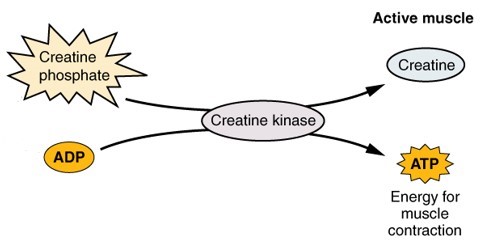
When ATP releases energy, it becomes ADP (adenosine diphosphate). To continue producing energy, ADP must be converted back into ATP.
This is where creatine becomes critical.
Phosphocreatine donates a phosphate group to ADP, rapidly regenerating ATP.
The equation is simple:
More creatine stored in the muscle = faster ATP regeneration = improved performance.
Supplementation increases muscle creatine stores by 10–40%, depending on baseline levels.
This enhanced ATP recycling system is why creatine consistently improves:
-
Strength output
-
Power production
-
Training volume
-
Recovery between sets
-
Sprint performance
-
Explosive capacity
This mechanism is foundational to understanding the benefits of creatine supplementation.
Creatine and Muscle Growth: What the Research Really Shows


One of the most searched questions online is:
Does creatine build muscle?
The answer is nuanced.
Creatine does not directly build muscle tissue. Instead, it enhances the environment that allows muscle growth to occur.
1. Increased Training Intensity
By improving ATP regeneration, creatine enables greater workload — more reps, heavier weights, increased volume.
More mechanical tension over time = greater hypertrophy stimulus.
2. Cellular Hydration Effect
Creatine increases intracellular water retention. This cellular swelling acts as an anabolic signal that may promote protein synthesis.
This is not “bloating” — it is muscle cell hydration.
3. Satellite Cell Activation
Research suggests creatine may increase satellite cell activity — cells responsible for muscle repair and growth.
4. Long-Term Lean Mass Gains
Meta-analyses consistently show individuals supplementing with creatine while resistance training gain more lean mass compared to placebo groups.
The clinically supported dose?
3–5 grams daily.
Prime Creatine delivers 5.1g per serving — aligning precisely with research-backed protocols.
Creatine for Brain Function and Mental Performance

Emerging research has dramatically expanded the understanding of creatine benefits beyond muscle.
The brain consumes approximately 20% of total body energy. Like muscle tissue, it relies heavily on ATP.
When sleep deprived, stressed, or cognitively overloaded, ATP demand increases significantly.
Studies suggest creatine supplementation may support:
-
Working memory
-
Reaction time
-
Mental fatigue resistance
-
Cognitive performance under stress
-
Neuroprotective mechanisms
Vegetarians and older adults who may have lower baseline creatine levels often show enhanced cognitive benefits from supplementation.
This dual benefit — physical and mental performance is why modern formulations such as Prime Power combine creatine with cognitive-support compounds.
Creatine is not just for athletes. It is for high performers.
Creatine After 40: Muscle Preservation and Longevity


After age 30, muscle mass begins to decline gradually, a condition known as sarcopenia.
After 40, this decline accelerates.
Loss of muscle mass is associated with:
-
Reduced metabolic rate
-
Decreased strength
-
Lower functional capacity
-
Increased injury risk
-
Higher risk of falls
Creatine supplementation combined with resistance training has been shown to:
-
Improve strength in older adults
-
Enhance lean mass retention
-
Support functional performance
-
Potentially support bone density
Cognitive resilience also becomes increasingly important with age. Given creatine’s role in brain ATP metabolism, supplementation may support both physical and mental vitality.
For individuals focused on longevity, creatine becomes foundational, not optional.
Do You Need a Creatine Loading Phase?
Traditional creatine loading protocols recommend:
20 grams per day (split doses) for 5–7 days
Followed by 3–5 grams daily
This rapidly saturates muscle stores.
However, research shows:
-
Taking 5g daily achieves full saturation within 3–4 weeks
-
Long-term benefits are identical
-
Loading may increase temporary digestive discomfort
For simplicity and compliance, most individuals benefit from consistent 5g daily dosing.
Prime Creatine Gummies provide 5.1g per serving, no loading required.
Consistency is more important than intensity.
Creatine Safety: Addressing Kidney Myths
Creatine is one of the most extensively studied supplements in sports nutrition history.
Key findings across decades of research:
-
No evidence of kidney damage in healthy individuals
-
No evidence of liver toxicity
-
No evidence of long-term adverse cardiovascular effects
-
Safe in studies lasting up to five years
Serum creatinine may rise slightly during supplementation. This does not indicate kidney dysfunction, it reflects normal creatine metabolism.
Individuals with pre-existing kidney disease should consult a healthcare professional before supplementation.
For healthy adults, creatine remains one of the safest, most validated supplements available.
Why 5g Per Day Is the Gold Standard Dose
Hundreds of trials converge around the 3–5g daily range.
Below 3g:
-
Muscle saturation may be incomplete
Above 5g long-term:
-
No additional benefit for most individuals
5g daily provides:
-
Full phosphocreatine saturation
-
Enhanced ATP regeneration
-
Improved strength and power
-
Cognitive energy support
-
Long-term safety margin
Prime Creatine and Prime Power are formulated around this research-backed standard.
Not underdosed. Not exaggerated. Scientifically aligned.
Creatine Gummies vs Powder: What Matters?
The convenience of creatine gummies has increased dramatically in recent years.
However, not all gummies are equal.
Manufacturing challenges include:
-
Heat sensitivity during processing
-
Stability issues
-
Underdosing in many products
-
Poor third-party testing
Many market gummies provide less than 1–3 grams per serving, below clinically effective ranges.
When choosing creatine gummies, look for:
-
Full clinical dosing (5g)
-
Transparent labeling
-
Verified manufacturing standards
Prime Creatine delivers 5.1g per serving, aligned with evidence-based dosing standards.
Convenience should not compromise efficacy.
Creatine and Hydration
Creatine increases intracellular water retention — drawing water into muscle cells.
This supports:
-
Cellular integrity
-
Performance capacity
-
Muscle fullness
Adequate hydration remains important.
General guidance:
-
Maintain normal fluid intake
-
Increase water slightly if training intensely
-
Monitor urine colour as hydration indicator
Creatine does not cause dehydration. It supports muscle cell hydration.
Creatine and Testosterone: Is There a Link?
Research examining creatine and testosterone shows mixed but interesting results.
Some studies suggest:
-
Small increases in DHT
-
No significant long-term testosterone suppression
-
Improved training capacity may indirectly support hormonal health
Creatine is not a hormonal supplement. It supports energy metabolism.
Improved training quality often leads to improved physiological outcomes.
Who Should Take Creatine?
Creatine supplementation may benefit:
-
Resistance trainers
-
Hybrid athletes
-
Runners performing sprint intervals
-
Professionals under high cognitive load
-
Adults over 40 focused on longevity
-
Vegetarians and vegans
-
Individuals recovering from high training volume
Creatine is not only for bodybuilders.
It is for anyone seeking improved cellular energy performance.
Final Thoughts: Performance Begins at the Cellular Level
Creatine is not hype.
It is not a shortcut.
It is not a stimulant.
It is a foundational energy compound that supports:
-
Muscle performance
-
Brain function
-
Strength retention
-
Healthy aging
-
Training progression
-
Cognitive resilience
Whether your goal is strength, productivity, or longevity, creatine remains one of the most validated tools available.
Prime Creatine and Prime Power are built around the clinically effective 5g standard, because real performance starts inside the cell.
References
Kreider RB et al. JISSN, 2017
Chilibeck PD et al. Med Sci Sports Exerc, 2017
Rawson ES et al. Amino Acids, 2011
Candow DG et al. Nutrients, 2021
Avgerinos KI et al. Experimental Gerontology, 2018